

Adrenal Fatigue
This section discusses adrenal and thyroid issues, especially within the context of, but not exclusive to, oral chelation for mercury toxicity. Oral chelation should follow ALL mercury amalgam removal programs and needs to be based on Andy Cutler’s careful protocol of safe and rational mercury detoxification. For detailed information, order his book Amalgam Illness – Diagnosis and Treatment.
- First make sure you have read the Adrenal FAQ’s. It contains a lot of valuable information!
- Then read the excellent article on Adrenal Fatigue by Dr Lam.
- And make sure you are aware of these websites to refer to:
- Dr Jacob Teitelbaum’s website, author of ‘From Fatigued to Fantastic’
- Dr Rind’s website, for an excellent overview on the adrenal and thryoid.
- Stop The Thyroid Madness for thyroid information and treatment with Desiccated Thyroid.
|
The one-sized fits all approach for adrenal support is ‘ACE’ – Adrenal Cortical Extract. It is the first supplement to try, and often the most helpful supplement in situations of fatigue and stress (see more details below). NOTE: You cannot depend on what most medical practitioners tell you regarding adrenal and thyroid function as they are most under-trained in this area. |
Adrenal Fatigue diagnosis should be made by:
1.) Clinical signs and symptoms should be the most important diagnostic criteria.
Signs & symptoms of low cortisol can be a more accurate indicator than all lab testing. Diagnosis should be based on these findings. Common signs and symptoms of adrenal weakness (hypoadrenal) include :
- low BP and dizziness on standing (orthostatic/postural hypotenstion)
- unexplained and chronic fatigue, aches and pain,
- hypoglycaemia, sugar and/or salt cravings
- frequent infections and difficulty shaking infections
- poor response to stress, crashing with stress, shaking with stressful events and,
- carbohydrate intolerance.
2). Proper saliva testing can confirm this, but treatment can be trialed should this not be an option. We strongly suggest DiagnosTechs for saliva testing through your doctor, or you can order a saliva test yourself from Canary Club.
REMEMBER : Lab tests are not always conclusive for mercury toxic people, but for the sake of being thorough should be done if at all possible. However, don’t let inability to test, due to cost etc., keep you from proceeding to find suitable treatments by trial.
3). Hair tests can give a very early indication of adrenal issues, showing up adrenal and thyroid problems years before they become visible on blood or saliva tests. More importantly, they can indicate a hidden source of toxicity, most often mercury, which could be causing the endocrine problems in the first place.
4). Tracking your daily temperatures. The thyroid in particular controls your metabolic temperatures, however the thyroid and adrenal systems rely on each other for optional health, so a problem in one endocrine system affects the other. Read the body temperature page for an explanation of exactly what to do.
Trial supplementation and/or medication should be used routinely if signs and symptoms suggest it, and the treatment continued based on response to these medications.
Thyroid considerations
ALWAYS treat your adrenals first, before taking thyroid support!The adrenals and the thyroid are strongly connected to each other and their management cannot be separated. When you have completed reading this section, please read the article about the thyroid. You MUST make sure you have assessed and treated your adrenals first before working on your thyroid! Treating your thyroid first will boost your metabolism and further fatigue your adrenals.
|
Oral chelation and mercury amalgam removal should proceed with caution in those who have compromised adrenals and/or thyroids. The hormonal systems should be to be stabilised first and then oral chelation and adrenal/thyroid medication and/or supplementation can continue simultaneously. Good adrenal and thyroid function supports successful detoxification during chelation.
Where to start: Adrenal vs. Thyroid? From www.drrind.com
If both the thyroid and the adrenals are weak, adrenal repair must precede thyroid repair (see Metabolic Scorecard™ to determine whether problem is adrenal, thyroid, or both). If the adrenals are weak, then even normal thyroid activity places an excessive burden on them. One may begin to feel ‘hypoadrenal‘ (coldness, weight loss, dryness, fatigue, insomnia, and/or anxiety) and then the body innately turns down its own thyroid energy production by increasing production of RT3. Conversely, if the adrenals are strong and the thyroid is weak or unable to keep up with the adrenals, one begins to feel ‘hypothyroid‘ (heat intolerance, weight gain and fluid retention, tiredness, excessive need to sleep and/or depression). A very common error is to focus entirely on the thyroid and ignore the adrenals. In a weakened adrenal state, prescribing thyroid medication that contains T4 and/or T3 may produce limited or transient improvement. Subsequent increases of the dose offer little or no benefit as the medication pushes the energy machinery into overdrive. Unfortunately, this higher energy level is unsustainable due to the stress on the adrenals. Eventually the adrenals become fatigued and the symptoms of low energy return. If, however, the adrenals are functioning well, the thyroid hormones can do their job and the result is good metabolic energy.
Adrenals and Lab Tests
For an overview of specific adrenal hormones go here…
Most adrenal testing is often not useful for mercury toxic people. The only reliable test is the cortisol saliva test. For this reason, most mercury toxic people use adrenal support based on symptoms and ignore the tests. If you are in a position to order lab tests, consider them, but base treatment options on signs and symptoms. The bare minimum tests for adrenal fatigue/stress are in RED type.
- CORTISOL SALIVA TEST: Saliva is sampled 4 times during a given day usually at these times:
- 7-8 AM, 11-12 noon, 4-5 PM & 11-midnight.
- The cortisol saliva testing MUST be done 4 times a day due to the fluctuations of cortisol induced by the circadian rhythm. Random cortisol blood (serum) or saliva tests at random points during the day have no value. The cortisol saliva test is the best, but again, it is also not always conclusive – especially with mercury poisoning. Strong symptomology is the best indicator which can be confirmed with a cortisol saliva test if necessary. Also, having results fall just within the so-called ‘normal range’ doesn’t mean you’re at an optimal or even functional level. Dr. Hans Selye was one of the first physicians to describe the stages of adrenal fatigue.
- Stage 1 – Adapted to stress
- Stage 2 – Adapted with DHEA slump
- Stage 3 – Maladapted Phase 1
- Stage 4 – Maladapted Phase 2
- Stage 5 – Non-adapted – Low Reserves
- Stage 6 – High DHEA
- Stage 7 – Adrenal Fatigue
USA: The best lab to have the saliva tests performed by is Diagnos Techs in the USA. Their tests are very comprehensive and they will offer your doctor excellent support as well as a suggested treatment program. You can also have a full male or female endocrine profile and a thyroid panel done with them. Here is a good list of options for finding a doctor or way to test yourself.
- South Africa: There are only one lab that can do the cortisol saliva test – Synexa Labs. Contact Synexa labs for local doctor options. Make certain you ask for the 4 times a day cortisol saliva test – named the ASI (Adrenal Stress Index)
There is no real substitute for the cortisol saliva test and temperature taking to understand your adrenal function. However, If you decide NOT to follow these recommendations, then the 24-hour Urine Cortisol test can be considered and/or used to gain extra information. It is by far a distant second-best option and is inferior to the cortisol saliva test, as it does not measure fluctuations in cortisol that occur naturally as part of the circadian rhythm. This test yields little valuable information and is not advised, rather get a cortisol saliva test performed.
- DHEA-Sand DHEA Most Labs will only offer you DHEA-Soption. It is good to test both of these if you can to assess how DHEA is sulfated in the liver thus giving you an idea of how well your phase-2 sulfation pathways in the liver are working. It is best to test these in the morning. However, DHEA is included in the ASI panel at DiagnosTechs.
- 17-OH Progesterone: The precursor to cortisol, gives you an idea of your adrenal reserves. This is also included in the ASI panel from DiagnosTechs.
- Females: Progesterone, Estrogens (Estrone – E1, Estradiol – E2 & Estriol – E3) & Testosterone
- Males: Progesterone, Androstenedione, Estrone – E1 & Testosterone
- Pituitary hormones: LH, FSH
- Aldosterone/Renin Test – Aldosterone is a mineralocorticoid, which means it regulates salt balance, specifically by retaining it. It is seldom considered in routine tests, but it is well worth checking.
Other tests can be ordered based on signs and symptoms of deficiencies (or excesses of particular hormones – see Diagnos Tech labs for more options on lab tests)
________________________________________________________________________________________________________
4) What can I do to support my adrenals?
The FIRST AND MOST HELPFUL CHOICE BY FAR is Desiccated Adrenal cortex, also known as ACE (Adrenal Cortical Extract)
This supplement is absolutely wonderful, and if you are only able to try one adrenal supplement,
then this is definitely the one to choose first.
It is very safe, and should be tried by everyone chelating or undergoing dental work to check if adrenal support is needed (though testing with a cortisol saliva test first is ideal for confirmation and doctor support). It is a fantastic base-line adrenal support and is generally safe across the board, including for children. They usually work immediately, but need to be taken for many months, even years, for optimal effect i.e. to help heal the adrenals.
The ‘adrenal cortex’ is where the steroid hormones are made in the human body, so some manufacturers only use the cortex in the manufacturing process, and this is considered preferable, while others use the whole adrenal gland. It does not seem to make a big clinical difference clinically for most, though a very small minority of people to tend to react to the ones that include the adrenal medulla (inner portion where adrenaline is made). These products are said to have the hormones ‘processed out’, thus only providing the building blocks of the gland (peptide chains), so that the gland can rebuild and repair itself. Their often exceptional, and instant affect, on adrenally insuffient people, suggests that some hormones do remain. Theoretically, when restoring the adrenals, hormones seem to allow the gland to REST e.g. cotisol/DHEA/progesterone, and adrenal cortex/glandular allows the gland to REPAIR. Many may need both i.e. cortisol and adrenal cortex, but adrenal glandular should always be tried first and cortisol added only if there is no improvements. Clinically, people on cortisol do not tend to have improved reactions to stress, even though dysfunctional individuals can quickly become ‘functional’ thanks to cortisol augmentation. Adrenal Cortex however does help people to become more stress-tolerant.
- Andy Cutler has in the past recommended Adrenal Cortex by ‘Nutricology’ (adrenal cortex tissue (bovine) organic glandular”), ‘Thorne Research’ ( “pure dried bovine adrenal cortex”) or ‘Standard Process’ in the Frequent Dose Chelation Yahoo group. Andy Cutler also noted also that “Adrenal Cortex Extract or ACE” used to be available as an injection and was used before hydrocortisone was available. When ACE is mentioned, he refers to Adrenal Cortex/Glandular, with a preference for the cortex, but not a big one. In other words either product is suitable.
- In South Africa: The only option is Adrenal Cytotrophin by Enzyme Process. Usual dosage: Take 2-6 tablets in the morning and one at lunch. If your sleep is interfered with, reduce dosage, and or take earlier in the day. You can remain on this for a very long time (many months, to a year or two).
- Other supplementation options and general advice:
- Diet & salt: You will feel a lot better if you eat frequent small meals with protein included with each meal. Protein is essential for adrenal support, and vegetarians may battle to include enough protein in their diet. Salt is also very important to include, with adrenally fatigued people having trouble retaining salt (sodium in particular). Current mainstream advice discourages the use of salt in food, causing further problems for your adrenals. The lack of salt is one of the reasons people with adrenal fatigue have low blood pressure (along with the fact that the other adrenal and salt-retaining hormone, aldosterone, is often reduced). You need to include a lot of salt in your diet to feel better. Choose a good quality sea-salt, and if you still need help, make some electrolyte drinks.
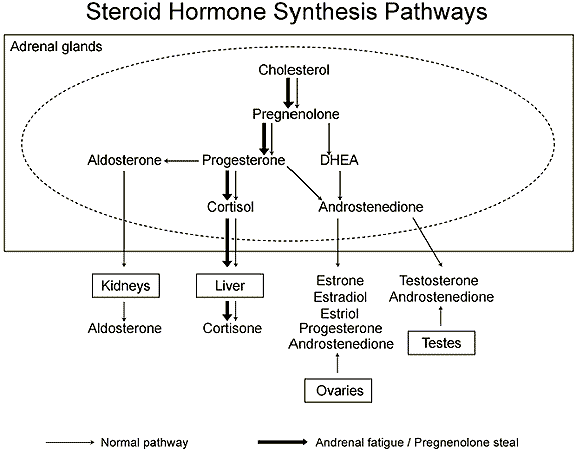
- Omega 3 oils: Ensure that your adrenals are fed high quality oils rich in Omega 3 (Pharmaceutical grade fish oils 1-2 tablespoons) daily in order to supply the ‘good’ cholesterol that is the precursor to the adrenal steroid hormones – see pathway here (courtesy of Dr Lam’s website). Intake of the right balance of essential fatty acids will help to promote adrenal recovery. Providing enough essential fatty acids is vital. Pharmaceutical-grade fish oils (e.g. cod liver oil), flax oil, borage oil and/or evening primrose oils are needed for this. This is the most commonly overlooked and most easily rectified solution/support for adrenal problems (and menopausal symptoms) and your adrenals cannot make hormones if they are not fed good quality oils.
- Other supplements: that are beneficial for the adrenal glands are:
- Vitamin C (2000mg/day)
- Vitamin E (800-1000IU/day
- B-vitamins 50-100mg/day of each in divided doses, especially pantothenic acid – B5 500mg twice a day, B6, and Biotin 2000mcg twice a day)
- Magnesium aspartate/chloride/citrate (500mg/day in divided doses)
- Zinc 50-100mg/day
- Herbs:
- Ginseng and ashwagandha support the adrenals by stimulating them to produce all of the hormones.
- Licorice works in a different manner, by inducing a cortisol-retaining effect which slows clearance of cortisol and increases its effects. It also helps to activate aldosterone receptors (see more info on how to measure licorice here…). Because ginseng boosts the adrenals it is not always the best thing for fatigued adrenals. You do not want to push already tired glands. For this reason licorice is often the ‘softer’ option.
- Licorice and ginseng should only be used about 2 weeks of the month to maintain their effect long-term. Licorice can be helpful in boosting adrenal function, because it helps the body retain more of its cortisol. These would give you adrenal support taken long-term if you were not going to do anything else. You DO NOT usually need licorice and ginseng if you are going to take Isocort (desiccated adrenal gland) or Hydrocortisone (synthetic cortisol).
- Ashwagandha is particularly good for combined hypothyroid and adrenal problems and it helps both simultaneously. Take 1000mg the first week, 2000mg the second week and 3000mg the third week and stay at this dose if it works for you.
- Bio-idential natural hormones: Other safe ways to support the adrenals is with supplements like pregnenolone (1mg/kg twice per day), DHEA (50-150mg/men & 25-50mg/females) and progesterone (creams), especially if lab tests indicate deficiencies in production. These are commonly available over the counter at health shops. They will not give you the full adrenal support needed, but rather supply the hormone/s that you can’t produce and should supplement if you are low in them. Get your levels tested if possible. These should never be given to children.
- Isocort: a standardized adrenal extract: This is available over the counter in the USA (OTC) and is the first choice of adrenal support for many. Isocort contains a small amount of freeze-dried adrenal cortex of New Zealand sheep (extracted through soluble fractionation). This amount is much less than the usual Adrenal Cortex supplements. However Isocort is standardized to contain 2.5 mgs. of cortisol per pellet (which we suspect is the legal amount of cortisol allowed to be sold over the counter). It also has some echinacea (a herb for immune support, which can pose a problem for some, especially if taken long-term), and also some other adrenal hormones made in the adrenal cortex like aldosterone (an adrenal steroid that regulates salts, especially sodium and potassium). It thus supplies a wider range of the corticosteroids manufactured by the adrenals including, and especially, cortisol. Isocort can be purchased over the counter or on-line as a nutritional supplement in the USA. UK residents can order from Wellnessworks in the USA and South African residents should get it sent to a friend in the UK and brought over by hand as customs may stop it and request a Section 21 permit (South Africa is limiting health freedoms by insisting all supplements and medications obtain a Section 21 permit from the Medical Control Council). International orders from Wellnessworks require you to e-mail the order through and phone through your credit card details rather than order directly on-line. They declare the full value on the customs declaration & so expect to pay 17.5 VAT on the parcel in the UK, together with a fee from whoever delivers it for them collecting the VAT – between £1.50 & £13.50.
- Taking 2 pellets of Isocort (each containing 2.5 mgs natural cortisol) would equate to a 5 mg tablet of Hydrocortisone (HC – synthetic cortisol). Some people find that even 8-10 Isocort a day doesn’t make a big enough difference, and they need to make the switch to using the stronger Hydrocortisone anyway, or another synthetic form of cortisol such as Prednisolone. But, althoughPrednisolone can work very well for some people, it should be noted that it is also hard on the liver. Andy Cutler notes that Methylprednisolone is much easier on the liver, and it does cost significantly more. Some people will use Adrenal Cortex as a general supplement and Isocort when needed e.g. when you feel your cortisol levels are low.
Always take your cortisol doses at close to these times to mimic the natural circadian rhythms at 8am, noon and 4pm
The general suggestion is 2 to 4 doses of 5mg. (or 2.5mg) spaced throughout the day in a routine, taken at the times mentioned above in order to mimic natural rhythms. If you have proper saliva testing you will know when you are low and at what times you need more cortisol, but if you don’t have the luxury of testing to determine this, start with:
- 2.5mg at 8am – 2.5mg at noon and 2.5mg at 4pm. If this is not enough, then slowly adjust the dosage up until you find the one that works for you. Try:
- 5mg at 8am – 5mg at noon and 2.5mg at 4pm. Figure out when your energy dips to discover when your cortisol is low and supplement then. For example if you have ample energy in the morning and none at noon and 4pm, then miss the morning dose.
- Some other commom dosing schedules are:
- 10mg at 8am and 5 mg at lunch, or
- 15mg at 8am, 5mg. at noon and, if needed, a further 5mg. at 4pm.
Teitelbaum, in the book “From Fatigued to Fantastic”, says to use the lowest dose of cortisol that feels the best and not to go above 20 mg. The highest dose of cortisol, 20 mg. is commonly quoted, however, on occasion, some may need closer to 30 mg. with stress dosing during time of serious emotional upset e.g. funerals, and then returning to the maintenance dose. Taking physiological doses (about 20mg.) of supplementary cortisone can partially suppress the body’s own adrenal function after about a month. However, healing of the adrenals frequently takes quite some time – as much as 2 years or more in some instances. When on steroids for a long period of time like this, a weaning off process is required at the end to allow the body to readjust back to normal production. Sometimes it’s vital to allow the adrenals to heal by using Hydrocortisone, while chelation removes the mercury preventing normal production and utilization of cortisol. Chelation and stress management will cure the problem over time. The best advice is to find the lowest dose possible of cortisol and maintain that level.
You will usually need the support of a doctor as Hydrocortisone is prescription only in South Africa (unless in the US – see International Pharmacy to order online). UK residents can also order from International Pharmacy (don’t forget to tick the box stating that you are taking them under the control of a doctor, and expect to pay VAT at customs and shipping charges). Chronically mercury-poisoned people may need long-term cortisol replacement while chelating (nine months to two years). If the damage to the hypothalamic-pituitary-adrenal axis (HPA axis) is resolved through chelation and subsequent healing of the tissues takes place, you will eventually be able to stop Hydrocortisone and should wean off it by taking smaller doses each week. Cortisol, as with all supplementary hormones should never be stopped abruptly, as you need to allow your own adrenal function to come back while you taper down slowly.

Tapers
Others can consider 5-8 day tapers every 2-3 months with Prednisolone(Intermediate-acting) and this is often enough to get the adrenals working again while chelation ultimately provides the cure. Andy Cutler notes in Amalgam Illness pg. 75 that: “Allergies and fatigue can be controlled with 5-8 day Prednisolonetapers (at fairly high doses) every 2 months during therapy [oral chelation] if needed”.
Hydrocortisone tapers may also be possible. You need 4 times the amount of Hydrocortisone (20mg.) to equal one dose of Prednisolone (5 mg.). So update the dosages accordingly. Hydrocortisone is a short-acting corticosteroid, while Prednisolone is an intermediate-acting corticosteroid making it much more suitable for tapers. Most people are able to convert Prednisolone into cortisol, but on rarer occasions not. Bear that in mind.
Hydrocortisone is available in tablet form (10mg known as Covocort in some countries and Cortef in the USA) and can be considered for long-term, low dose use while chelating. The average time needed to heal the adrenals can be 9-16 months. Those considering occasional corticosteroid tapers every 2 – 3 months are usually advised to use Prednisolone5mg tablets (Previously traded as: Capsoid, Lenisolone, Meticortelone, Predeltilone), which is now discontinued in South Africa. Most doctors will offer you Prednisone – note the different spelling – (traded as: Meticorten, Panafcort, Predeltin, Prednisone) and on rare occassion some mercury toxic livers may not be able to convert Prednisone into Prednisolone. Other synthetics (Prednisone, Dexamethasone etc) are not as good because the body has to do more conversions, and mercury poisoned people might have trouble with this and cause increased side-effects. When used sensibly cortisol supplemention can have miraculous benefits while you chelate.
If you are desperate for cortisol and cannot get a doctor to support you, Hydrocortisone Cream can easily be purchased. The dosage is 1/2 ml of the 1% Hydrocortisone cream or 1/4ml of 2% cream. It is put into capsules and swollowed in the morning. Others prefer to use about 1 tablespoon topically and rotate the application site daily to protect the skin from its long-term effects.
Cortisol or Licorice?
Another option is to use instead of cortisol is Whole Licorice Extract (Glycyrrhizic acid content 15%) intead of cortisol and see how you do.
Adrenal insufficiency is linked to insomnia in two ways.
- If your cortisol drops too low during the night your blood sugar drops too. Your body compensate by releasing adrenaline as an emergency measure to mobilize more sugar. This has the effect of waking you in an instant. This can be reduced by eating high protein snack before retiring e.g. sardines, nuts of high quality protein shake.
- In early stages of adrenal fatigue cortisol levels tend to rise and if they are high at midnight they can energise you and keep you awake. Phosphorylated serine can be used to lower cortisol at these times due to its ACTH dampening effect.
Aldosterone is another hormone released from the adrenal cortex. It is a mineralocorticoid, meaning it regulates salt balance, specifically by retaining sodium and secreting potassium.
~ High Aldosterone causes high blood pressure and low potassium.
~ Low Aldosterone levels provide symptoms like low blood pressure, high pulse (especially on standing), salt cravings, dizziness and/or light headedness on standing and palpitations. In severe cases high potassium and low sodium is found in the blood. Low aldosterone induces more renin to be made from the kidney which is why renin is measured with aldosterone. It’s more typical for people with adrenal insufficiency to be low on cortisol but sufficient in aldosterone, but some people will have both. So, the usual recommendation is to start on Hydrocortisone and monitor to see if aldosterone would also be needed, if so Fludrocortisone (synthetic equivalent of aldosterone) commonly traded as Florinef, can be added.
SAFE USES OF CORTISOL By William McK. Jefferies